
The Placer County Arrest Log
The Sheriff's Office posts an official rolling 10 Day Arrest Log as a PDF. Reach it through the Press Log page. One recent edition ran 42 pages. That length shows this is a full multi-day agency report, not a quick in-custody list. Warrant arrests and failure-to-appear matters sit alongside ordinary bookings. A name on the list does not mean the person is still in jail.
The Who's In Custody portal takes a different approach. It offers a 168-hour booking log option. The two products differ in reach. The portal tracks recent booking activity and current status, while the ten-day PDF reaches farther back with report fields, so note the generation date and start from the newest page.
How to Read the Placer County Blotter
Start at the official Press Log gateway. An old saved PDF can otherwise look like the current Placer County arrest report. Always check the date printed on the report. The arrest itself may have happened hours before the file was generated.
- Open the Sheriff’s Press Log page and follow its current ten-day report link.
- Confirm the report date and covered period.
- Search the document for a complete surname, then compare the first name and date of birth.
- Read the case number, arrest time, location, and agency context together.
- Treat charge text as an charge and note each code exactly.
- Use the active roster if current custody, rather than the historic event, is the question.
The Arrested Today page covers one day only. The county portal goes deeper. It searches by name, date of birth, gender, inmate number, or booking PIN. A missing name can stem from spelling, release, transfer, another jurisdiction, delayed entry, or a withheld record.
What an Arrest-Log Entry Shows
A Placer arrest log entry is built from detailed fields. Names, dates, times, and charge descriptions fill each row. Think of them as the report's vocabulary. Any single field may be incomplete or out of date.
| Field | How to read it |
|---|---|
| Case number | Connects the agency event to later requests or court research. |
| Name and birth date | Help distinguish people with similar names. |
| Occupation | Appears only where supplied and may be blank. |
| Physical descriptors | Can include eye color, hair color, sex, height, and weight. |
| Completed arrest date and time | Dates the reported enforcement event. |
| Arrest location | Identifies where the reported arrest occurred. |
| Charges | Lists alleged offenses at that stage, not disposition. |
The ten-day report has no booking-photo layout. Photos exist, though. Placer photographs each person at booking, but the Sheriff FAQ limits access to another person's photo and jail records. So a log line never promises a mugshot.
Weekend and Holiday Arrests
Multi-day reports earn their keep after weekends and county holidays. They free you from a single daily cutoff. Placer shows no proven surge pattern. No fixed publication hour exists either. Read a cluster of dated entries as exactly that, and skip the trend claims.
Timing gets complicated fast. Arrest time, booking time, report generation, and court filing are four separate events. Booking itself involves identity questions, a photograph, scans, and fingerprints. Agency paperwork and jail data entry can trail the street arrest. Court filings may lag further. The county-wide home guide shows how to compare the live roster, booking records, and case status. It keeps those stages separate.
Archives and Retention
The public PDF rolls across ten days. The portal opens 24-hour and 168-hour booking windows. A row can vanish from either view. That does not mean the jail or court record was destroyed. Placer's Enterprise System Catalog allows corrections records to be purged under adopted retention schedules. No public source gives one universal retention term for every booking record, photo, or report.
Older material takes a focused request. File it through the Sheriff's NextRequest portal. Include the person, date range, arresting agency, facility, case or booking number, and record type. Ask whether the item is stored, destroyed under a schedule, transferred, or exempt. Court filings and disposition records follow the Superior Court copy process. Offsite court files can take up to three weeks.
The California State Archives covers state corrections history. Ordinary Placer jail records do not move there automatically, so start with the Sheriff or the court, and turn to CDCR sources only after state-prison custody.
Placer Arrest News Patterns
Gold Country Media runs the region's issue-based police logs. Auburn Journal, Placer Herald, Roseville Press Tribune, and The Loomis News carry them. The logs are text-first and agency-sourced. Timing is weekly, not live-roster. Sacramento Bee crime coverage picks individual Placer, Roseville, and Rocklin stories. That reporting is episodic, sometimes paywalled, and never a full county log.

News coverage is context, not custody data. Treat it as a secondary layer beside the dated agency record. A story can summarize a Placer arrest. It may skip a later release. Always verify the person, agency, date, and case through official sources. No local outlet here runs a routine official mugshot gallery.
City Enforcement Reports Differ
Placer County's cities each handle enforcement reporting in their own way. Roseville puts out aggregate arrest and activity summaries. Rocklin goes a different route, with weekly crime reports plus an official-linked CitizenRIMS interface. Auburn gives visitors a records request path. A 2020 weekly adult arrest log exists there as well. It shows only that the city once published such logs. None of these is a countywide custody feed. For a look at how one city formats its activity data, the official Roseville crime-log page is a solid example.
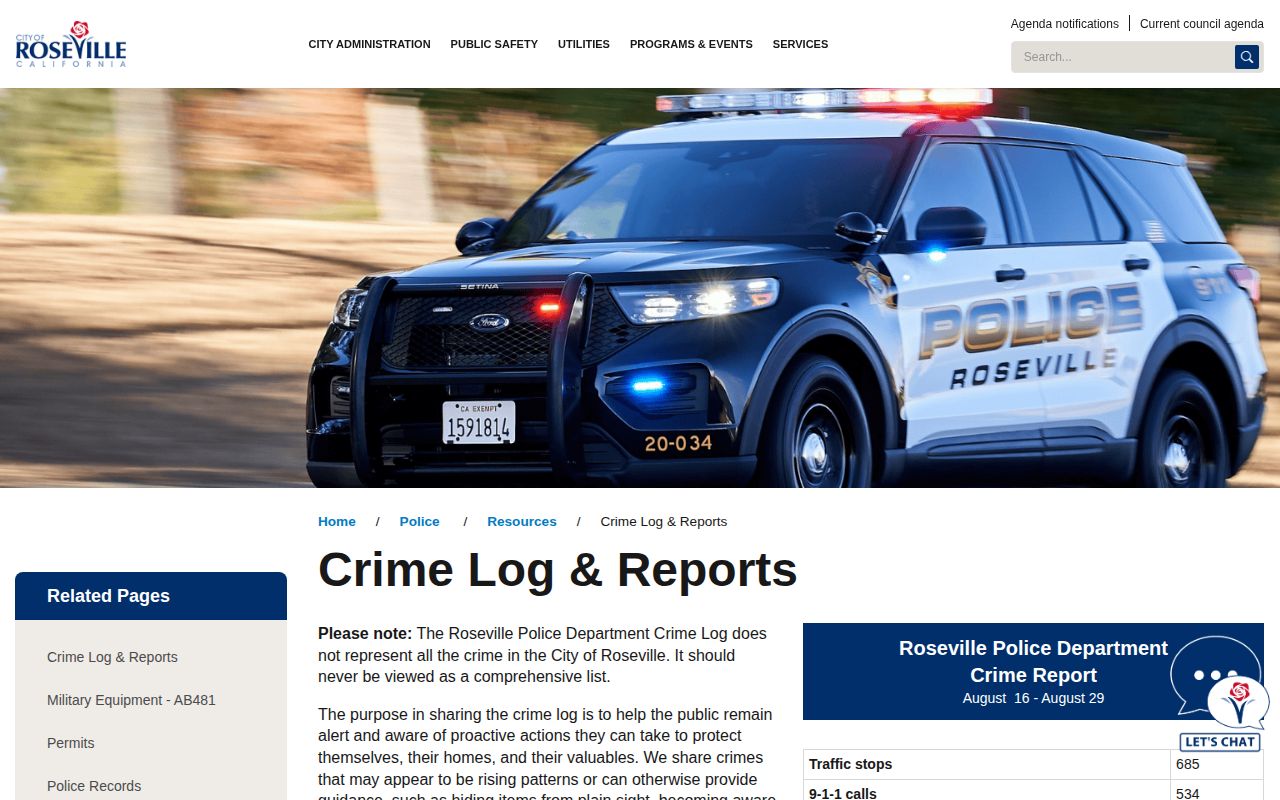
A city report is context, not a custody check. Roseville or Rocklin paperwork can tell you which department made the arrest. But the person arrested most often lands in the Placer County Jail system. So the county roster is the tool for learning who is in custody right now. Local Crime News carries Placer-city pages, yet it is unofficial and sometimes mixes up county labels. Treat it as a lead and nothing more. Confirm each entry with the Sheriff, the city police department, or the court. Rely on it only then.
Placer Reports Are Allegations
Reading a Placer arrest report well takes a little discipline. Match names with care, since two people can share one. Keep the report date attached to whatever you copy down. The Placer Superior Court portal tracks how a case moves later. Filings can lag behind. The portal itself warns that it is not the official court record. A warrant notation does not settle the case. An arrest location tells you nothing about where someone lives. Hold three facts apart: the dated log, current custody status, and the final court outcome.